
[ad_1]
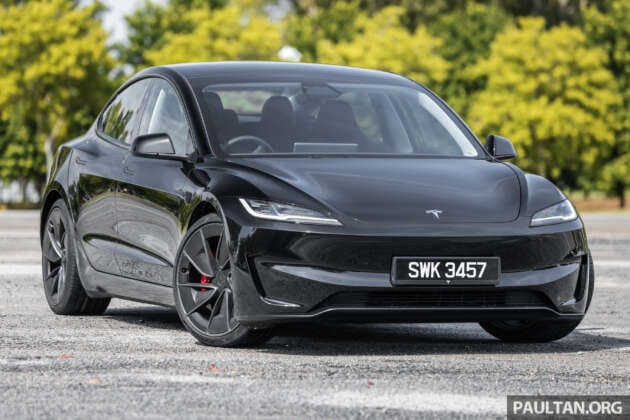
It appears that the tax holiday that has sired the boom of electric vehicle sales in Malaysia is coming to an end soon – at least when it comes to CBU fully-imported models. Nothing has been officially confirmed, of course, but the lack of any announcement of an extension during the tabling of Budget 2025 last week was a damning non-answer, given that car companies will need to be told in advance if it’s the contrary to be able to firm up their plans for the country.
Exemptions on import and excise duties for EVs since 2022 have hitherto provided fertile ground for a slew of new brands to enter the market, primarily from China. This has turned the Malaysian market into a sort of free-for-all for foreign car companies, with only the RM100,000 floor price for CBU cars giving local carmakers Proton and Perodua some respite.
But the government’s intention has always been for these companies to set up CKD local assembly operations here, enticing them with an extension of tax exemptions until 2027. Now that the end of CBU exemptions has been implied, companies selling EVs in Malaysia are faced with a hard decision – either invest millions into building a new factory or exit the market.


will continue to enjoy exemptions until 2027
Of course, some companies have already begun local assembly of EVs, these being Volvo with the XC40 and C40 Recharge (the new EX30 will join them next year) and Mercedes-Benz with the EQS500. For others, CKD operations are either imminent (Chery with the Omoda E5, although the Q2 2024 timeline for that has come and gone without any news) or on the cards for the coming year.
In the case of the latter, firms that are set to locally assemble EVs by 2025 include Neta and Pekema subsidiary Central Auto Distributors (CADB) with the Dongfeng Box – both through the NexV Manufacturing (NMSB) plant in Rembau, Negeri Sembilan – as well as GWM through EP Manufacturing (EPMB) in Pegoh, Melaka. Also set to assemble cars locally is BAIC, also through EPMB, although its EV plans are hazy at best.
Then there’s Proton, which is widely expected to eventually build its forthcoming eMas 7 (stylised as e.MAS 7) locally and has plans to assemble smart vehicles, too. Perodua, which is developing its own sub-RM100k EV in-house, is a foregone conclusion.

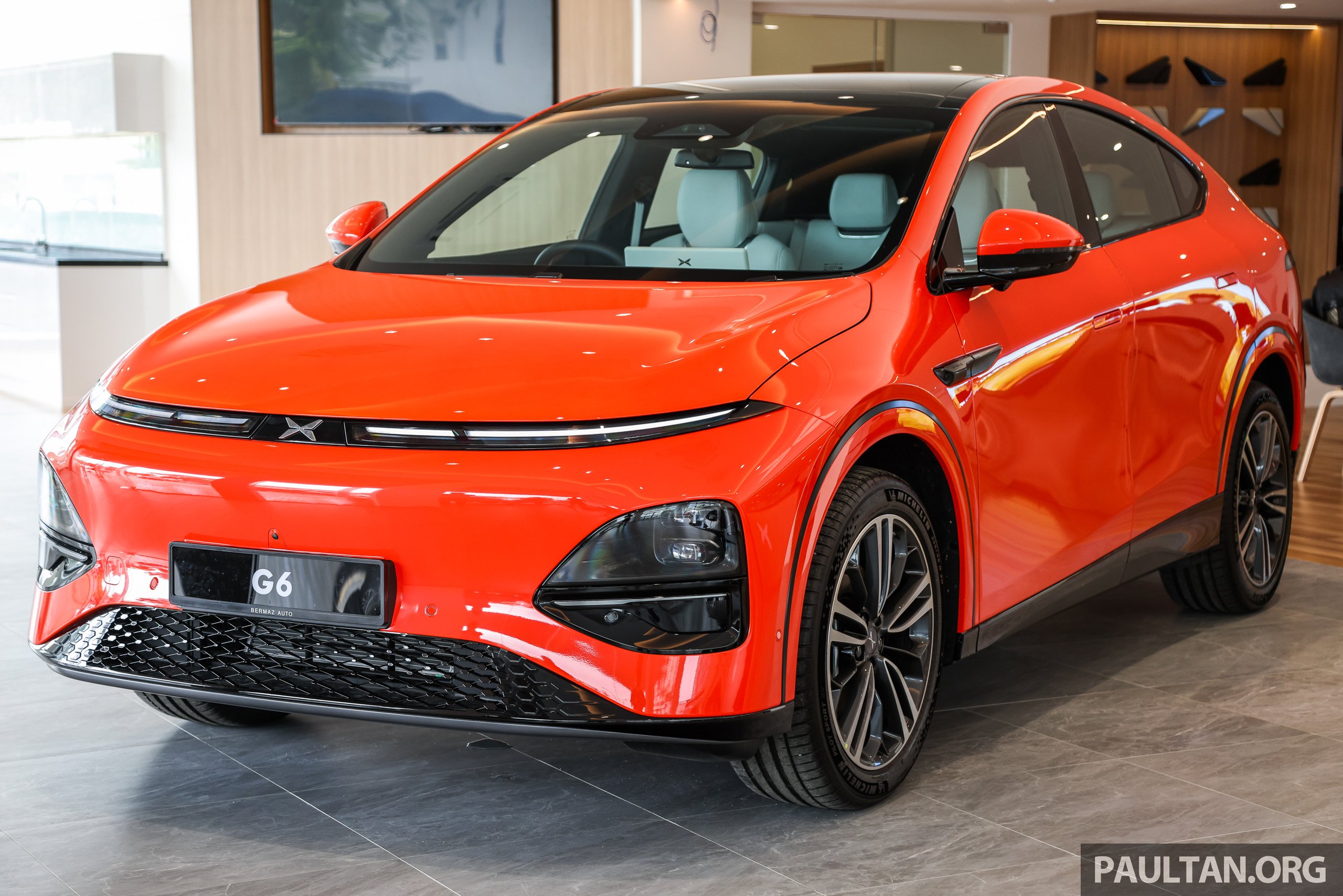
Other brands such as Xpeng are on the fence with regard to their CKD plans, weighing up the cost of the investment versus the expected sales volume. Of those that have not revealed any plans for local assembly, the most notable will have to be BYD – its cars take up three of the top five spots on the sales charts, so an exit would deal a devastating blow to the local EV market.
Then again, the BYD brand is being managed by Sime Darby Motors in Malaysia, which has its Inokom factory in Kulim, Kedah that would make short work of any CKD needs. The marque has also only recently awarded distributorship of the premium Denza brand to Sime Darby – something it wouldn’t have done if it was going to exit the market only 14 months later.
We expect most other brands that offer EVs in Malaysia to commence CKD operations in due course, including BMW and Kia which already assemble their petrol-powered models here. But there are a few others that only have a very slim chance of setting up a CKD plant, such as Porsche and the elephant in the room, Tesla.
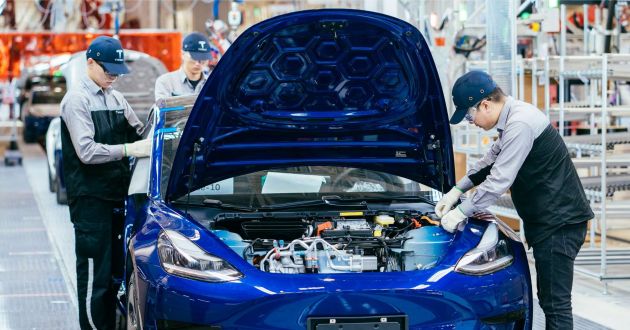
Tesla’s incredibly specialised EVs are built at the firm’s four main Gigafactories in the US, Germany and Shanghai. It has steadfastly refused to set up CKD operations anywhere in the world, and even though plans to build Gigafactories in new locations have been reported time and again, the company has either dragged its feet or reneged on those plans entirely.
Now that it’s clear that CBU EVs won’t enjoy the same incentives after 2025 and will thus be unfavourably priced due to taxes, will these brands continue to sell electric models in Malaysia? There will be some who will be making their way to the exit door, certainly – look at what happened when similar incentives for CBU hybrid vehicles dried up in 2014, causing almost all companies to stop selling hybrid models. What will happen to after-sales support for existing customers if smaller brands leave the market entirely?
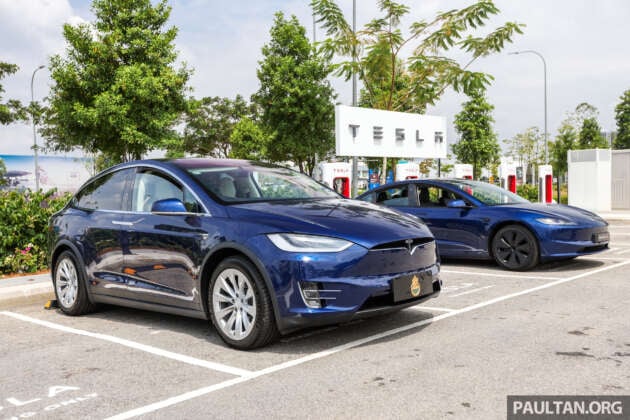
the government to extend incentives
We will know the answers to those questions in due time. Of course, we can’t rule out the government continuing to provide tax exemptions to Tesla in particular as part of its special arrangement under the BEV Global Leaders initiative (which, notably, never had local assembly as a prerequisite). The company has, after all, invested in a Supercharger network (now with 56 chargers in 12 locations) and is continuing to hire local staff despite not having the security of long-term tax exemptions.
Other brands like Porsche are also unlikely to offer CKD EVs (although it’s not impossible; Porsche does assemble the Cayenne locally at the aforementioned Inokom plant), but while sales might end past 2025, after-sales support, at least for the bigger brands, should continue. In Porsche’s case, buyers are far less sensitive to price increases, so cars like the Taycan and Macan could continue to be sold even at inflated prices – as is already the case with the rest of its models.
Over to you now – will the end of EV incentives entice you to buy a Tesla while you still can, or will the brand’s potential exit give you pause? Sound off in the comments after the jump.
Looking to sell your car? Sell it with Carro.
[ad_2]
Source link